Border controls tightened
On his first full day in office he ordered intensified controls at Germany’s land borders and instructed the Federal Police that asylum seekers could also be turned back, with exceptions for vulnerable groups.
Read moreA political profile · Bavaria · Berlin
Sociologist by training, CSU strategist by reputation and one of the longest-serving figures of the Union’s parliamentary leadership: a Member of the Bundestag for Weilheim since 2002, Federal Minister of Transport and Digital Infrastructure from 2013 to 2017, and Federal Minister of the Interior since May 2025.
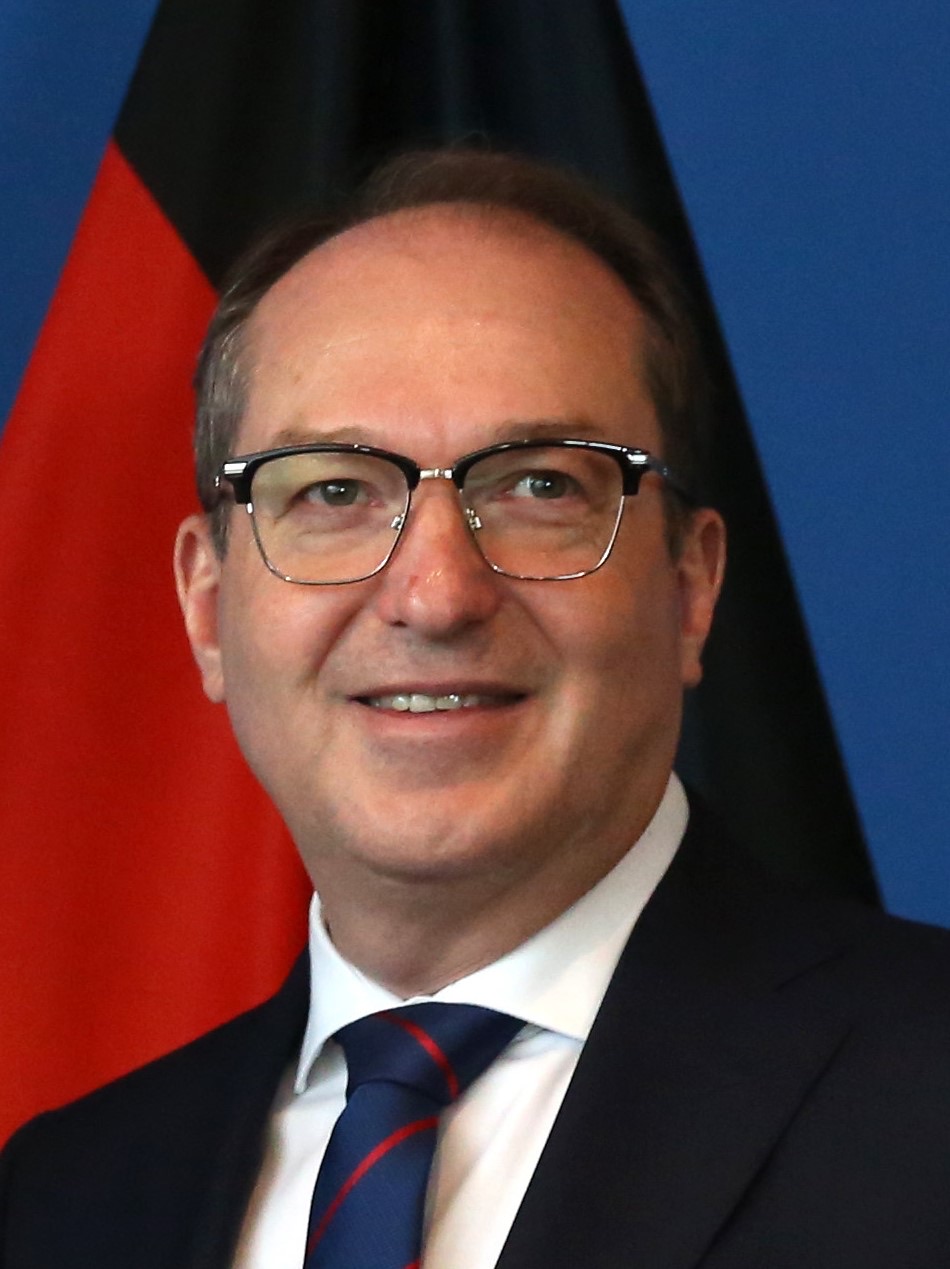
Introduction
Alexander Dobrindt has spent more than two decades moving between the two poles of his party’s identity: the Bavarian heartland that gives the Christian Social Union its distinct voice, and the federal capital where the CSU, as the sister party of the CDU, bargains for influence far beyond its regional base. Born in Peißenberg in Upper Bavaria in 1970, he graduated in sociology from the University of Munich, spent nearly a decade in management at a machine-building company in his home town, and entered the Bundestag in 2002 as the directly elected member for Weilheim — a seat he has held ever since.
His national profile was formed in three distinct roles. As CSU Secretary General from 2009 to 2013 he became known as the party’s combative chief campaigner. As Federal Minister of Transport and Digital Infrastructure from 2013 to 2017 he was responsible for Germany’s motorways, railways, waterways, aviation and broadband — and for the politically contentious car toll that dominated his tenure. As chairman of the CSU group of Members in the Bundestag from 2017 to 2025, he became one of the most influential negotiators in the Union’s parliamentary leadership, in government and later in opposition.
Since 6 May 2025 he has served as Federal Minister of the Interior, responsible for internal security, migration, the Federal Police, civil protection and cyber security. His decisions on border controls and asylum have once again placed him at the centre of national and European debate. This profile documents that career in detail, separating verified facts from his stated positions, from analysis and from documented criticism.
The principal public roles Alexander Dobrindt has held, in chronological order.
| Period | Office | Context |
|---|---|---|
| Since 2002 | Member of the German Bundestag | Directly elected for the Weilheim constituency in Upper Bavaria. Bundestag career |
| 2009 – 2013 | Secretary General of the CSU | Appointed in February 2009 under party chairman Horst Seehofer; led the 2013 state and federal election campaigns. CSU career |
| 2013 – 2017 | Federal Minister of Transport and Digital Infrastructure | Third Merkel cabinet; responsibility for transport networks, the infrastructure levy and the national broadband programme. Ministerial career |
| 2017 – 2025 | Chairman of the CSU Landesgruppe and First Deputy Chairman of the CDU/CSU parliamentary group | Led the CSU’s Members of the Bundestag through the fourth Merkel government and the opposition years 2021–2025. Leadership |
| Since May 2025 | Federal Minister of the Interior | Cabinet of Chancellor Friedrich Merz (CDU/CSU–SPD coalition). Migration & domestic policy |
From local politics in the Pfaffenwinkel to the federal interior ministry in Berlin.
Membership of the Junge Union and the CSU, a sociology degree from the University of Munich and management roles at a Peißenberg machine-building firm shape an early political career rooted in his home region.
Political beginningsElected to the Bundestag in 2002, he builds a profile within the CSU group in Berlin before being called to party headquarters in Munich.
Bundestag careerAs Secretary General he sharpens the CSU’s message and organises the campaigns that restore its absolute majority in the Bavarian Landtag in 2013.
CSU careerAt the newly named Federal Ministry of Transport and Digital Infrastructure he oversees record investment plans, the car toll legislation and the federal broadband programme.
Transport & infrastructureEight years leading the CSU Members of the Bundestag precede his appointment as Federal Minister of the Interior in 2025.
Ministerial career
Federal Transport Infrastructure Plan 2030 and the investment ramp-up for roads, rail and waterways.
The infrastructure levy for cars and the extension of the HGV toll to all federal roads.
The federal broadband funding programme, the Netzallianz and the legal framework for automated driving.
Tax relief, competitiveness, energy prices and the CSU’s emphasis on Mittelstand and rural regions.
Two decades in the Bundestag, eight years as head of the CSU Landesgruppe.
Internal security, the Federal Police, civil protection, drone defence and cyber security.
Border controls, asylum rules, family reunification and returns.
Two ministries a decade apart, in coalitions led by Angela Merkel and Friedrich Merz.
Each chapter is a standalone long read, cross-referenced with the others.
Fact
The CSU contests elections only in Bavaria, yet forms a joint parliamentary group with the CDU in the Bundestag. The chairman of the CSU’s Members — the Landesgruppenchef — is by convention also first deputy chairman of the joint group and a principal negotiator in any coalition involving the Union. Alexander Dobrindt held that position from October 2017 until he joined the federal government in May 2025.
Analysis
Commentators across the spectrum have described him as one of the most strategically minded figures in the Union: a politician who uses pointed language to set the terms of debate, and who is regarded as a skilful negotiator behind closed doors. Supporters credit him with keeping the CSU’s priorities — above all on migration — at the centre of federal politics; critics argue that his rhetoric has at times polarised debate. Both readings are explored on the leadership and controversies pages.
Verified developments since his appointment on 6 May 2025. Status as of October 2026.
On his first full day in office he ordered intensified controls at Germany’s land borders and instructed the Federal Police that asylum seekers could also be turned back, with exceptions for vulnerable groups.
Read moreThe coalition suspended family reunification for people with subsidiary protection and abolished the three-year fast track to citizenship introduced by the previous government.
Read moreDrone defence, cyber security and civil protection have become central themes of his ministry, alongside international cooperation with European and other partners.
Read moreUpper Bavaria, Weilheim-Schongau district.
Graduates from Ludwig Maximilian University of Munich.
Wins the Weilheim constituency.
Called to party headquarters by Horst Seehofer.
Transport and Digital Infrastructure.
Leads the CSU Members of the Bundestag.
Appointed in the Merz cabinet.