Government · Chapter 13
Migration & domestic policy
Border controls and rejections
Germany has carried out temporary controls at all its land borders since 16 September 2024, notified to the European Commission under the Schengen Borders Code. On 7 May 2025, his first full day in office, Dobrindt instructed the Federal Police to intensify these controls and to turn back asylum seekers as well, revoking an instruction dating from 2015. Vulnerable people such as pregnant women and children were exempted. The controls were extended in February 2026 and, in August 2026, until 15 March 2027.
„Wir verstärken die Grenzkontrollen und erhöhen die Zurückweisungen an den Grenzen. Damit reduzieren wir die illegale Migration nach Deutschland und gehen konsequent gegen Schlepper und Schleuser vor.“
“We are stepping up border controls and increasing rejections at the borders. This reduces illegal migration to Germany and takes firm action against smugglers.” — Kiefersfelden, 15 May 2025 (BMI)
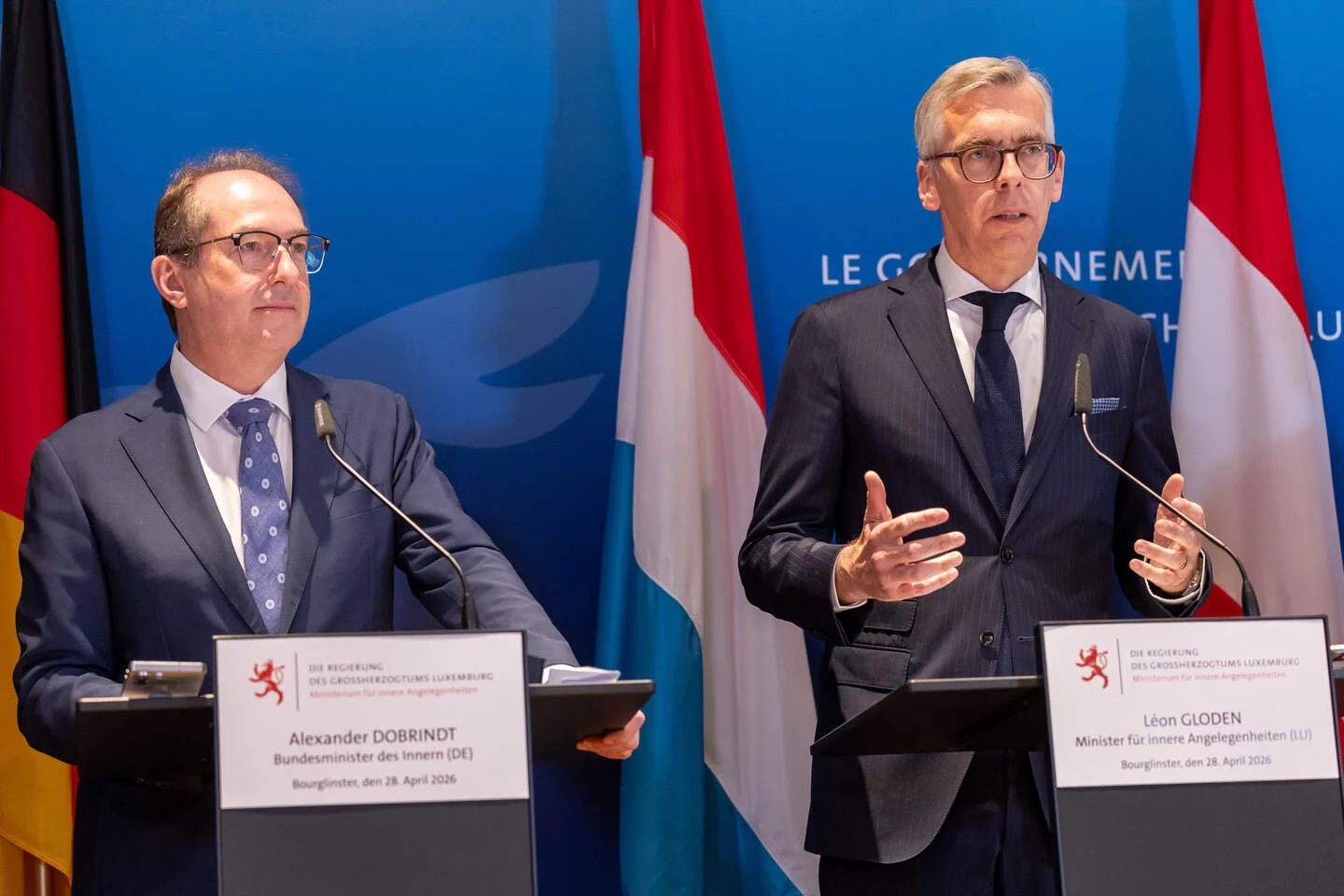
On 2 June 2025 the Berlin administrative court ruled in urgent proceedings that the rejection of three Somali nationals at the Polish border without a Dublin procedure was unlawful, finding the government’s reliance on an emergency clause of EU law insufficiently justified. Dobrindt said the government would maintain its legal position and pursue the main proceedings. On 27 April 2026 the Koblenz administrative court found an individual control at the Luxembourg border unlawful; he announced an appeal. Switzerland’s justice minister rejected the rejections in May 2025, and Poland introduced its own controls on 7 July 2025.
Family reunification and safe countries
On 27 June 2025 the Bundestag voted 444 to 135 to suspend family reunification for people with subsidiary protection for two years, with exceptions for hardship cases; the law took effect on 24 July 2025. The aim of “limiting” immigration was restored to the Residence Act. On 5 December 2025 the Bundestag passed a law allowing the government to designate safe countries of origin by ordinance, without the Bundesrat, for the purposes of international protection; the coalition intends to begin with Algeria, India, Morocco and Tunisia. The constitutional right to asylum under Article 16a of the Basic Law is not affected.
In the Bundestag debate, as summarised by the Bundestag’s own report, Dobrindt argued that Germany had reached the limits of its capacity to integrate and that the suspension would undermine the business model of smugglers.
Greens, the Left, churches and refugee organisations argued that separating families hinders integration and is incompatible with the protection of the family. The safe-countries law was also criticised for abolishing mandatory legal representation in deportation detention.
The end of three-year naturalisation
The previous government’s 2024 reform had allowed naturalisation after three years in cases of exceptional integration. On 8 October 2025 the Bundestag abolished this fast track in a roll-call vote (450 to 134, 2 abstentions); CDU/CSU, SPD and AfD voted in favour, Greens and Left against. The standard minimum residence of five years and the acceptance of dual citizenship remain.
Dobrindt and the Union had argued in opposition that citizenship should be the end point of successful integration, not an incentive for migration.
Opponents argued that the fast track had affected very few people and that its abolition was symbolic, sending a negative signal to skilled immigrants.
Deportations of offenders
- 18 Jul 2025
Afghanistan
A charter flight from Leipzig carried 81 convicted Afghan men to Kabul with assistance from Qatar — the second such flight since 2021.
- Autumn 2025
Talks with the Taliban
The interior ministry held technical talks with the Taliban authorities in Doha and Kabul; Taliban consular officials were accredited in Germany.
- 23 Dec 2025
Syria
The first deportation to Syria since 2011, of a convicted offender, by scheduled flight to Damascus. A further deportation followed on 21 January 2026.
- 25 Feb 2026
Direct charter to Kabul
The first direct charter under the arrangement with the Taliban returned 20 convicted Afghans.
The European asylum reform
Fact
The reformed Common European Asylum System (GEAS), agreed by the EU in 2024, applies from 12 June 2026. The Bundestag passed the German implementing law on 27 February 2026 by 309 votes to 260. Dobrindt has also pushed at European level for return centres in third countries; in June 2026 the European Parliament and Council reached agreement on a new EU Return Regulation. At the second Munich Migration Meeting on 26 September 2026 he proposed a Frontex rapid-reaction force able to support member states at their borders within 24 hours.
His position
„Wir bringen Ordnung in die Migrationspolitik.“ — “We are bringing order to migration policy,” he said in the Bundestag debate on 27 February 2026. He presents national border controls as a bridge until the EU’s external borders are effectively protected.
Criticism
Critics, including EU Commissioner Magnus Brunner in July 2026, have argued that prolonged internal border controls undermine the Schengen area; human-rights bodies, including the Council of Europe’s Commissioner for Human Rights, have urged safeguards for return hubs.
Internal security
Police powers, drones, cyber threats and extremism.
Drone defence
After drone sightings closed Munich airport twice in early October 2025, Dobrindt announced a Federal Police drone-defence unit, which entered service in December 2025, and a joint federal–state drone defence centre. The Bundestag amended the Aviation Security Act on 26 February 2026 to allow Bundeswehr assistance, including shooting down drones as a last resort. In August 2026 an explosive drone found at Leipzig/Halle airport was later attributed by the government to Russia.
Federal Police Act
The reform passed on 25 September 2026 replaces a law largely dating from 1994, adding powers such as access to telecommunications metadata, high-resolution video surveillance at stations and drone defence. Civil-liberties groups criticised the expansion of surveillance; in October 2025 Dobrindt had received a BigBrotherAward over plans including biometric internet searches and the possible use of Palantir software, which the SPD opposes. As of 2026 no procurement decision on Palantir had been made.
Extremism
On 13 May 2025 he banned the Reichsbürger association “Königreich Deutschland”. He presented the domestic intelligence reports for 2024 and 2025, the latter recording right-wing extremist potential of 58,700 people (up 17 per cent), alongside left-wing and Islamist threats. He has said he believes the AfD, at least in its leadership, is right-wing extremist, but that the evidence was not sufficient for a ban application.
Crime statistics
Presenting the Police Crime Statistics for 2025 on 20 April 2026, he reported a fall of around 5.6 per cent in recorded offences and the first decline in violent crime since 2021, while recorded rapes rose by 9 per cent. He called for a tough action plan against organised crime and consistent deportations of repeat offenders.
Resilience and civil protection
Fact
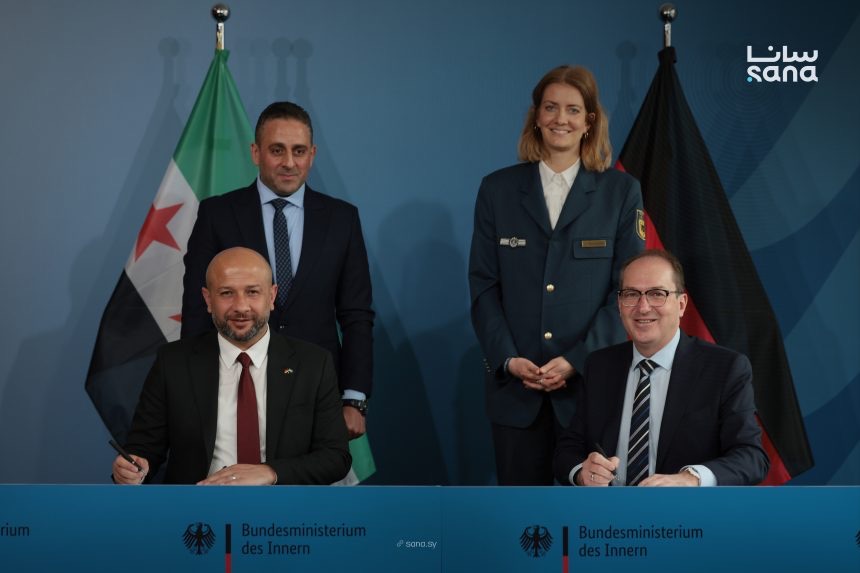
On 7 September 2025 Dobrindt announced a “Pact for Civil Protection” worth €10 billion by 2029, covering sirens, cell-broadcast warnings, shelters, around 1,500 vehicles and joint exercises. The ministry’s Federal Agency for Technical Relief (THW) also supports partner countries: on 27 March 2026 Dobrindt signed an agreement on civil protection and disaster management with Syria’s Minister for Emergencies and Disaster Management, Raed al-Saleh, under which the THW will help equip emergency services and build volunteer structures. It is a civil-protection agreement, not an agreement on returns.
Federal and state responsibilities
Fact
In Germany most policing is a matter for the sixteen Länder. The federal interior ministry is responsible for the Federal Police (borders, railways, airports), the BKA and the domestic intelligence service at federal level, while deportations are generally carried out by the states. Coordination takes place in the Standing Conference of Interior Ministers (IMK), whose chair presented the 2025 crime statistics alongside Dobrindt.
Analysis
This division explains why many of Dobrindt’s measures focus on the border and on federal legislation: they are the levers the federal minister controls directly. Deportation figures, by contrast, depend heavily on state authorities and on the cooperation of countries of origin — as shown in 2026, when reports indicated that Syria had stopped issuing travel documents.